



Blog
UK Mosque Wudu Area Safety Checklist for Management

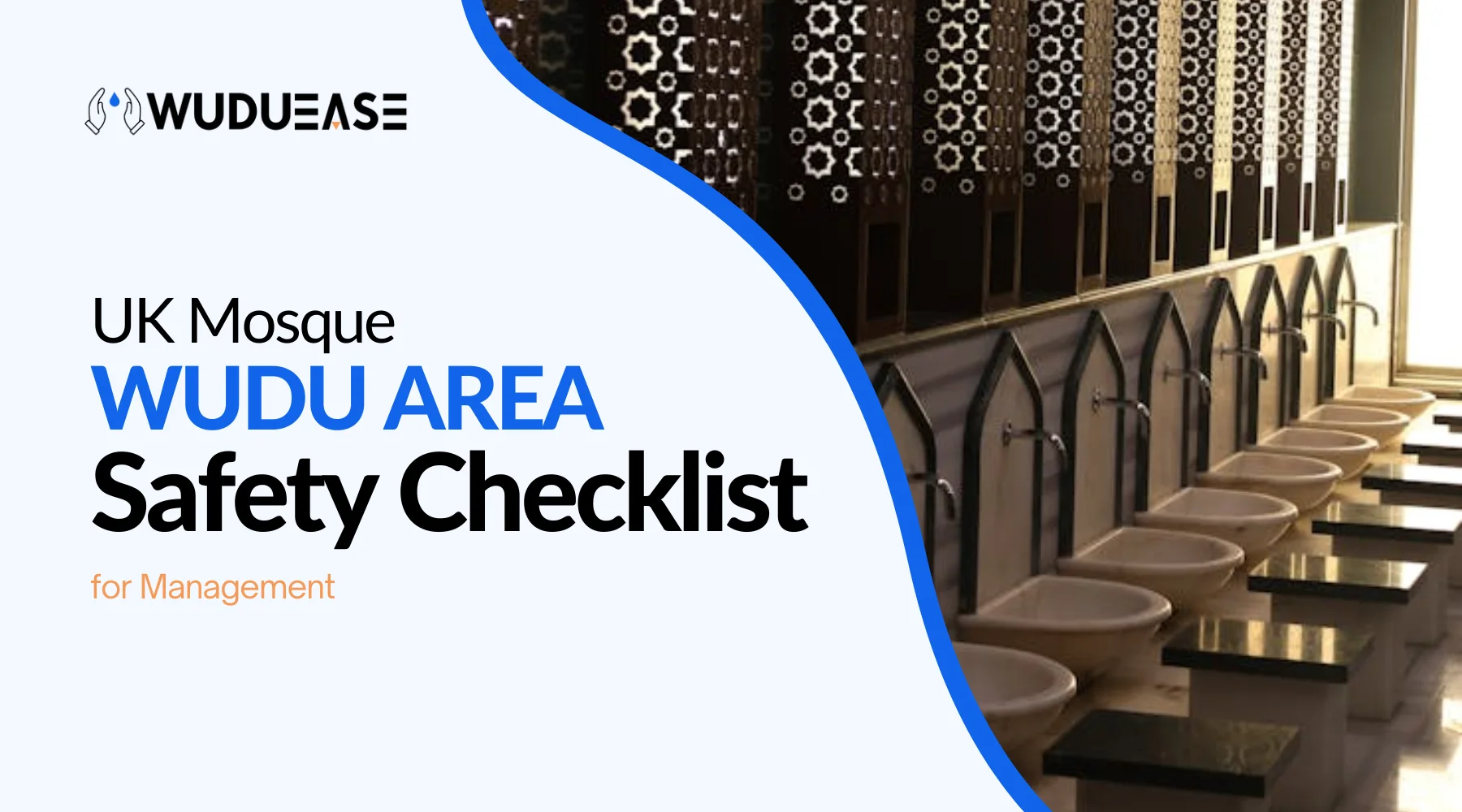
Keeping the Wudu area safe, clean, and accessible is crucial for every mosque in the UK. This space for ablution must ensure comfort, safety, and respect for all users while meeting UK health and safety rules. With good design, quality fittings, and regular upkeep, mosques can create a setting that respects the importance of Wudu and meets the needs of diverse worshippers. This checklist helps mosque management assess and improve their Wudu facilities to achieve high standards of safety.
At WuduEase, we focus on Islamic hygiene and ablution solutions for homes, mosques, madrasas, Islamic centres, and community spaces in the UK. Our top-quality products include ergonomic Wudu Basins, hygienic Foot Baths, Portable Foot Washers, and practical Islamic Washroom Accessories, all designed for safety and durability.
Why a Wudu Safety Checklist is Essential for Mosques in the UK
UK mosques support a diverse Muslim community, which includes elderly worshippers, children, disabled people, new converts, and visitors. Mosque management teams must balance Islamic practises with UK laws and public standards for hygiene, accessibility, and safety.
Mosques in the UK must follow regulations like the Health and Safety at Work Act 1974, the Disability Discrimination Act 1995, and the Equality Act 2010. A clear and written Wudu safety plan is essential for:
- Legal compliance with UK health and safety legislation.
- Reducing liability due to slips, falls, scalding, or injury.
- Promoting cleanliness in line with Islamic hygiene standards (Taharah).
- Improving accessibility for disabled, elderly, and mobility-impaired users.
- Optimising maintenance and timely fixture replacement.
- Boosting community trust in the mosque’s care and professionalism.
UK mosques can use a complete Wudu safety checklist to meet their religious, community, and legal duties effectively.
Wudu Area Design and Layout
Adequate Space Allocation
- Ensure each worshipper has at least 1.2m x 1.2m of personal space.
- Provide visual floor markings or modest partitions to guide safe distancing.
- Avoid placing Wudu stations too close together to prevent crowding or splashing.
- Allocate enough space for seating, foot baths, mobility aids, and circulation.
Gender-Specific Wudu Zones
- Provide separate and clearly labelled male and female ablution areas.
- Ensure privacy with screens, partitions, or staggered layout planning.
- Position entrances strategically to avoid crossover between genders.
Flooring and Slip Prevention
- Use non-slip, water-resistant flooring such as textured porcelain or matte ceramic tiles.
- Apply sealants or coatings that prevent water pooling and increase traction.
- Integrate floor-level drainage channels to quickly redirect excess water.
- Place rubber-backed anti-slip mats near basins and foot baths.
Lighting and Ventilation
- Install bright, shadow-free LED lighting to ensure visibility at all times.
- Use motion sensor lights to increase energy efficiency and reduce touchpoints.
- Implement mechanical extractors or windows for cross-ventilation.
- Prevent mould and mildew buildup with routine ventilation checks.
Wudu Fixtures and Fittings
Safe and Ergonomic Wudu Basins
Choose easy-to-use, posture-friendly basins that cut down on strain and splashing. WuduEase suggests:
- Al Buraq Square Dual Wudu Basin – great for modern mosques.
- Ceramic Easy Dual Level Wudu Basin with Mixer – perfect for all ages.
- Dual Level Ceramic Wudu Basin with Mixer – increases accessibility.
- Easy Ceramic Dual Wudu Basin with Mixer – allows for easy cleaning and saves space.
Key Features to Consider:
- Soft, rounded corners to prevent injuries.
- Anti-bacterial ceramic surfaces and built-in drainage.
- Options for wall or floor mounting with hidden plumbing.
- Built-in mixers for safe water temperatures.
- Automatic shut-off or sensor taps to save water.
Dedicated Wudu Foot Baths
- Pick ergonomic designs that let users elevate their feet safely.
- Use anti-scald taps to prevent burns.
- Add built-in or nearby seating for older users.
- Consider the Foot Bath Wudu Basin with a chair for extra comfort and easy access.
Portable Wudu Options
For schools, community centres, multi-use halls, or temporary congregations:
- Portable Wudu Foot Washers offer a mobile, efficient solution.
- Easy to clean, refill, and relocate as needed.
- Ideal for expanding prayer services without permanent plumbing.
Hygiene, Sanitation, and Cleanliness
Cleaning Schedules
- Daily Cleaning Plans: Create clear daily cleaning schedules, focusing on cleaning before and after Jumu’ah prayers.
- Weekly Deep Cleans: Perform thorough cleanings at least once a week, particularly in busy mosques.
- Safe Disinfectants: Use non-toxic, Shariah-compliant disinfectants that are safe for all surfaces.
- Staff Safety: Equip cleaning staff with personal protective equipment (PPE) and ensure safe storage for chemicals.
Wastewater and Drainage Management
- Design floors so water doesn’t stay on them.
- Make sure every drain has odour traps and backflow valves.
- Use stainless-steel drain covers that are easy to remove and clean.
- Install alarms in basins and baths to warn of overflow.
Hand Drying and Waste Disposal
- Provide touch-free hand dryers or paper towel dispensers.
- Install foot-pedal or sensor bins to limit contamination.
- Empty bins multiple times daily and disinfect bin areas.
- Avoid using cloth towels to prevent germ spread.
Accessibility and Inclusion
Facilities for the Elderly, Disabled, and Children
- Provide dual-level or height-adjustable Wudu basins.
- Offer seated Wudu options such as the Foot Bath Wudu Basin with Chair.
- Equip areas with grab rails, low-tension taps, and emergency call buttons.
- Keep walkways wide (minimum 900mm) for mobility aid access.
Visual and Language Signage
- Include simple Arabic, English, Urdu, and Bengali text where appropriate.
- Use icons for universal understanding (e.g., tap symbol, foot symbol).
- Highlight dry/wet zones, hygiene rules, and basin usage instructions.
Pathways and Barrier-Free Design
- Ensure seamless entry with no steps, ledges, or raised thresholds.
- Use automatic or lever-handle doors for ease of entry.
- Avoid slippery doormats and place drainage mats at exits.
Maintenance, Inspection, and Proactive Repairs
Weekly and Monthly Inspections
- Inspect all plumbing, drainage, flooring, and electrical systems weekly.
- Create standard checklists for volunteers or janitorial teams.
- Repair any damage (tiles, taps, leaks) within 48 hours.
Maintenance Log and Accountability
- Maintain a digital or physical maintenance book
- Assign staff or committee members to oversee facility upkeep.
- Track warranties and service dates for all installed equipment.
Long-Term Fixture Planning
- Replace basins, taps, or flooring showing cracks, corrosion, or inefficiency.
- Upgrade to energy-saving or water-saving models when applicable.
Health, Safety, and Compliance Documentation
Health and Safety Policies
- Integrate ablution area care into your mosque’s formal health policy.
- Assign a Health & Safety Officer familiar with Wudu protocols.
Annual Risk Assessments
- Document hazards: wet floors, sharp edges, hot water, and bacteria risk.
- Rate each risk by likelihood and severity.
- Apply clear mitigation strategies and log them for reference.
Emergency and Evacuation Protocols
- Include Wudu zones in fire drills and emergency maps.
- Ensure exit routes are illuminated and obstacle-free.
- Provide clear instructions for assisting disabled users in emergencies.
User Education and Community Awareness
On-Site Reminders and Visual Aids
- Display waterproof posters with hygiene guidance and safety rules.
- Use large icons for water usage tips, cleanliness, and respect reminders.
Training for Staff and Volunteers
- Host quarterly workshops for janitors, staff, and khadims.
- Educate them on Islamic cleanliness, first aid, and hazard prevention.
- Invite guest experts from Islamic hygiene organisations to guide updates.
Digital Guides and Mosque Announcements
- Share Wudu etiquette reminders via WhatsApp groups or bulletin boards.
- Include ablution safety tips in Jumu’ah khutbahs where relevant.
Elevating UK Mosque Wudu Standards with WuduEase
Wudu is more than a ritual; it shows both inner purity and care for others. The area where it takes place should be clean, respectful, and welcoming. UK mosques need to adapt to the needs of today’s diverse Muslim community while still following Islamic values.
By using this Wudu safety checklist, mosque leaders can lower risks, promote community health, and lead by example for other faith groups. Choosing the right fixtures, keeping everything clean, and ensuring access for all are key to creating a safe and respectful Wudu space.
At WuduEase, we are committed to this mission. Check out our specially designed Wudu basins, foot baths, and accessories that blend traditional Islamic values with UK safety standards. Whether you are upgrading an old Wudu area or starting a new mosque project, our products and advice will help you better serve your community.
People Also Ask (FAQ)
What is the best flooring for Wudu areas in UK mosques?
The best flooring is non-slip, water-resistant tiles with good drainage and slip-resistant coatings. Adding mats and keeping the area clean increases safety.
How often should a mosque’s Wudu area be cleaned?
Wudu areas should be cleaned daily on the surface and deep cleaned weekly. Busy mosques should sanitise multiple times each day, especially before peak prayer times.
Can portable Wudu stations be used in temporary prayer spaces?
Yes, portable Wudu Foot Washers allow for ablution during temporary events, outdoor Eid prayers, or in rented spaces. They are compact and flexible.
How can mosques support disabled worshippers during Wudu?
Mosques can help by installing dual-level or seated basins, grab rails, wide entrances, and features like Foot Bath Wudu Basins with chairs for comfort.
Are UK mosques legally required to provide accessible Wudu areas?
While not always legally required, the Equality Act 2010 supports inclusive design. Providing accessible Wudu facilities is a good practise.
What features make a Wudu basin safe and ergonomic?
Safe features include rounded edges, splash-free designs, easy-to-reach taps, stable seating, thermostatic controls, and proper drainage.
Can Wudu basins have automatic water shut-off?
Yes, many modern basins, including those from WuduEase, have motion sensor taps or timed shut-offs to save water and prevent waste.
Upgrade your mosque’s ablution facilities with WuduEase. Explore our Wudu Basins, Foot Baths, and Accessories to ensure safety and dignity for all worshippers, regardless of age or ability.